
Electronics
Simple BC547 Blinking LED Circuit
May
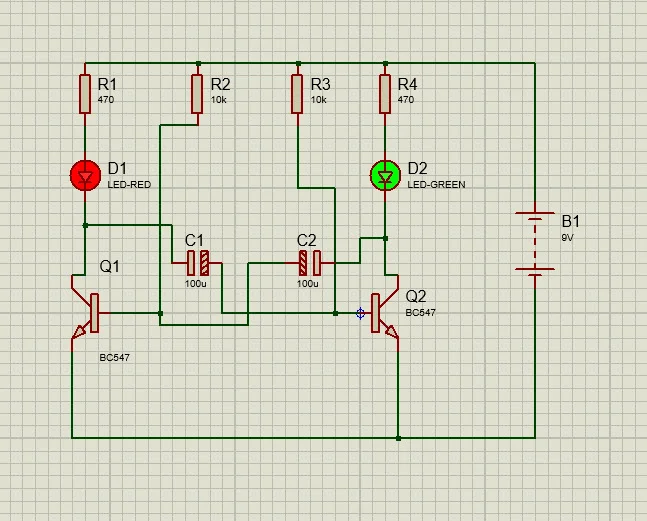
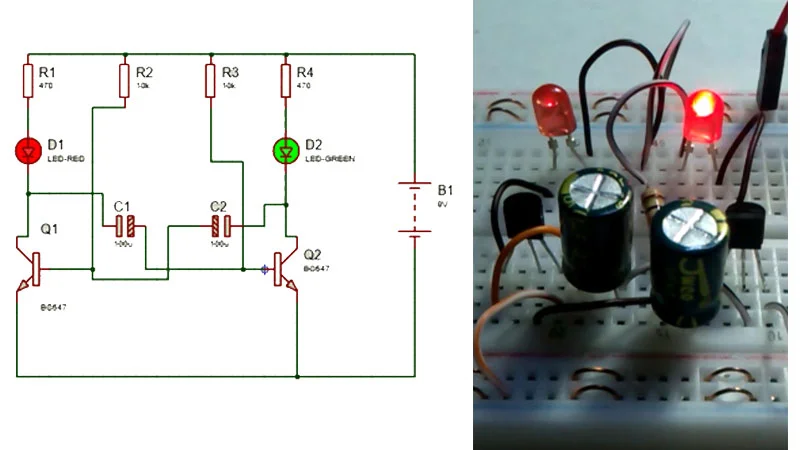
I recently built a simple blinking LED circuit using two BC547 transistors, and it turned out to be a really fun little electronics project. Even though the circuit is very basic, it’s actually a great way to understand how oscillators and switching circuits work in real electronics.
This type of circuit is commonly known as an “astable multivibrator.” The two BC547 transistors continuously switch on and off, causing the LEDs to blink alternately without needing any microcontroller or programming. Just a few resistors, capacitors, transistors, and a power source are enough to make it work.
One of the coolest things about this circuit is how many practical ideas can come from something so small and simple. It can be used for:
-
LED flashers and indicators
-
Basic alarm systems
-
Electronic learning projects
-
Signal generators
-
Timing and pulse circuits
-
Decorative blinking lights
-
Beginner transistor experiments
For beginners in electronics, this project is perfect because it teaches important concepts like transistor switching, capacitor charging/discharging, and timing behavior in circuits.
The BC547 transistor is also very popular because it’s cheap, easy to find, and works great for low-power electronic projects. That’s why many students and hobbyists use it when learning electronics for the first time.
Simple circuits like this may look small, but they are actually the foundation of more advanced electronic systems. Every complex device starts with understanding basic components and how they interact together.
Sometimes the best way to learn electronics is not through theory alone, but by building small projects with your own hands and watching them come to life.
Two-transistor flashing circuit