

Robotics articles, The latest trainings
Best Balance Sensors for Robots | Gyroscope, IMU & Tilt
Feb
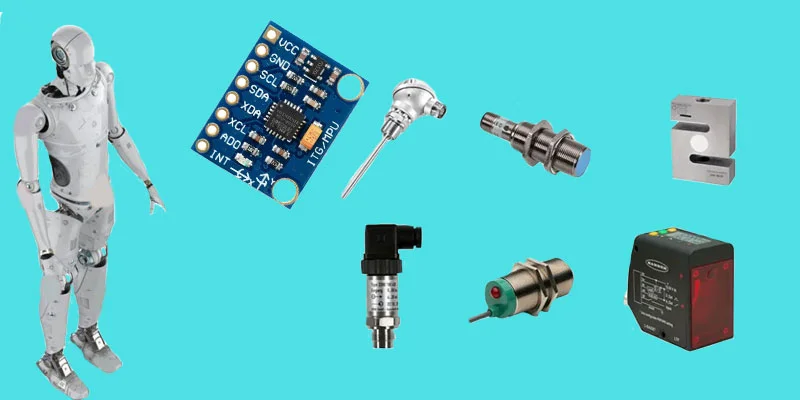
For robots that require balance, motion and balance sensors are essential. These sensors provide real-time data on angles, acceleration, and orientation, allowing the controller to adjust movements and maintain stability. Choosing the right sensor improves precision and stability for two-wheeled, flying, and industrial robots.
1. Gyroscope
Function: Measures rotation rates around X, Y, and Z axes to detect changes in direction.
Recommended Models:
-
MPU-6050: Combined gyroscope and accelerometer, ideal for balancing robots.
-
L3G4200D: High precision, suitable for drones and professional projects.
2. Accelerometer
Function: Measures linear acceleration and gravity direction to detect tilting angles.
Models:
-
ADXL345: 3-axis, perfect for stabilization and balancing.
-
MMA8452Q: Sensitive and accurate, for educational and lightweight industrial projects.
3. Inertial Measurement Unit (IMU)
Function: Combines gyroscope and accelerometer (sometimes magnetometer) for complete motion and angle data.
Models:
-
MPU-6050: Ideal for small and two-wheeled robots.
-
MPU-9250: Suitable for robots requiring precise navigation.
4. Tilt Sensor / Inclinometer
Function: Detects tilting angles or slope of the surface; simple and cost-effective.
Models:
-
SW-520D: Digital tilt sensor, great for educational projects.
-
ADIS16209: High-precision analog sensor for industrial robots.
Applications
-
Two-wheeled robots: MPU-6050 or ADXL345 for angle control and balance.
-
Flying and industrial robots: MPU-9250 or L3G4200D for fast motion and precise navigation.
-
Simple educational projects: SW-520D tilt sensor.
Using these sensors correctly improves robot balance and stability and lays a foundation for professional and advanced robotics projects.
