

Internet of Things, The latest trainings
Best ESP8266 Module for IoT Projects
Feb
The ESP8266 microcontroller has revolutionized IoT and automation projects by offering low-cost WiFi connectivity and versatile capabilities. Whether you are a beginner or an experienced electronics hobbyist, choosing the right ESP8266 module can determine the success of your project.
This video introduces you to the various ESP8266 microcontroller types
1. Overview of Popular ESP8266 Modules
The most commonly used ESP8266 modules are:
-
ESP-01: Compact and budget-friendly, ideal for simple WiFi-enabled tasks.
-
ESP-07: Offers more GPIO pins and external antenna support for extended range.
-
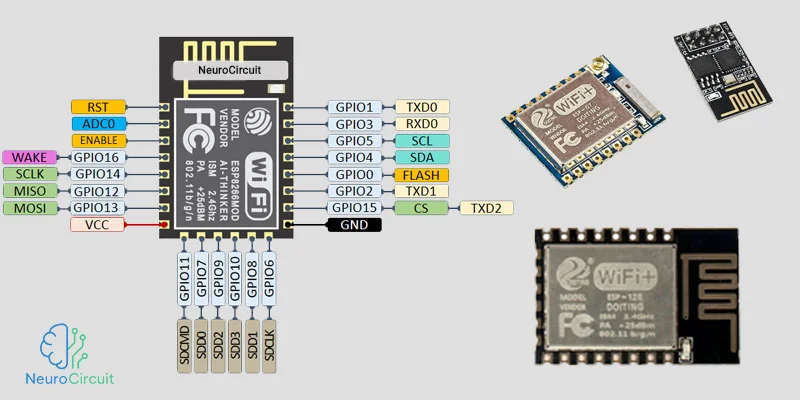
ESP-12: Highly versatile with multiple GPIOs, SPI/I2C support, and Arduino IDE compatibility.
-
NodeMCU: A development board with USB support, ready for rapid prototyping.
2. ESP-01: Minimalist and Efficient
ESP-01 is perfect for lightweight projects like controlling a single relay or reading one sensor. Its limited GPIO pins make it unsuitable for complex designs, but for simple IoT setups, it’s reliable, compact, and affordable.
3. ESP-07: More Power, Better Range
ESP-07 comes with more GPIO pins and an external antenna connector, improving WiFi performance. It’s suitable for projects requiring slightly larger coverage while maintaining a compact footprint.
4. ESP-12: Most Versatile Choice
ESP-12 is widely used in IoT applications. Its multiple GPIOs, compatibility with SPI, I2C, and UART, and Arduino IDE support make it ideal for:
-
Smart home automation
-
Multi-channel relay control
-
Sensor networks
ESP-12 strikes a balance between features, flexibility, and community support.
5. NodeMCU: Easy Prototyping
NodeMCU is more than a module—it’s a development board. With built-in USB programming and voltage regulation, it’s perfect for rapid IoT prototyping. Beginners and professionals alike can quickly deploy fully functional systems without extra hardware.
6. Choosing the Right Module for a Relay Project
For controlling a 5-channel relay module, ESP-12 and NodeMCU are the most practical choices. They provide enough GPIO pins to manage multiple relays reliably. ESP-01 can work for smaller setups, but adding multiple GPIO expanders increases complexity.
7. Conclusion
Choosing the right ESP8266 module depends on your project requirements:
-
ESP-01: Simple, low-cost, compact setups
-
ESP-07: Moderate GPIO and extended WiFi range
-
ESP-12: Advanced features, ideal for intermediate IoT projects
-
NodeMCU: Fast prototyping and beginner-friendly
Understanding the differences between these modules ensures efficient design, stable WiFi communication, and successful IoT deployment.
By selecting the appropriate ESP8266 module, you can build reliable, connected devices, automate your home or office, and develop low-cost, high-performance IoT solutions.
