

Internet of Things, The latest trainings
Getting Started with ESP8266 Microcontroller
Feb
The ESP8266 microcontroller has transformed the world of IoT development by offering powerful WiFi capabilities at an incredibly affordable price. Whether you are a beginner in embedded systems or a professional electronics engineer, the ESP8266 remains one of the most popular choices for building connected devices.
At its core, the ESP8266 is a WiFi-enabled microcontroller with built-in TCP/IP networking support. Unlike traditional microcontrollers that require external communication modules, ESP8266 integrates wireless connectivity directly into the chip. This dramatically simplifies hardware design and reduces cost, making it ideal for smart home systems, automation projects, and wireless sensor networks.
Key Features of ESP8266
One of the biggest advantages of ESP8266 is its balance between performance and simplicity. It typically runs at 80 MHz (or 160 MHz), supports multiple GPIO pins, UART, SPI, I2C communication, and features deep sleep mode for low-power IoT applications.
Important features include:
-
Built-in WiFi (802.11 b/g/n)
-
TCP/IP stack support
-
Low power consumption modes
-
Arduino IDE compatibility
-
OTA (Over-the-Air) firmware updates
-
Compact size for embedded designs
Because of its Arduino compatibility, developers can quickly prototype using the Arduino IDE without dealing with complex SDK setups. This accessibility has made ESP8266 one of the most widely adopted IoT microcontrollers worldwide.
ESP8266 vs ESP32 – Which One Should You Choose?
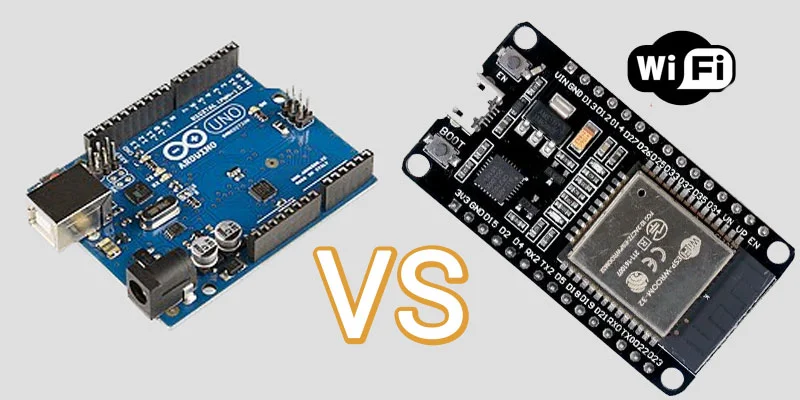
A common comparison in embedded systems is ESP8266 vs ESP32. While ESP32 offers dual-core processing, Bluetooth support, and more GPIO pins, the ESP8266 is still highly relevant for projects that do not require advanced features.
If your project needs:
-
Simple WiFi connectivity
-
Low cost hardware
-
Compact PCB design
-
Battery-powered operation
Then ESP8266 is often the smarter and more economical choice.
However, for advanced IoT systems requiring Bluetooth, higher processing power, or additional peripherals, ESP32 may be the better option.
Popular ESP8266 Projects
The versatility of ESP8266 makes it perfect for:
-
Smart home automation systems
-
WiFi-based relay controllers
-
IoT temperature and humidity monitoring
-
Wireless data logging systems
-
MQTT-based IoT communication
-
Web server-controlled devices
Its ability to host a small web server allows developers to control devices directly through a browser, making rapid deployment easy.
Why ESP8266 is Still Relevant Today
Despite newer chips entering the market, the ESP8266 remains widely used due to its reliability, massive community support, and extensive documentation. From DIY makers to professional product development teams, ESP8266 continues to power thousands of IoT devices globally.
If you are starting with IoT development, the ESP8266 microcontroller offers the perfect combination of affordability, wireless connectivity, and ease of use. Mastering it will give you a strong foundation in embedded systems, wireless communication, and connected device design.
| After reading the article, click here to continue the tutorial series |
