Microcontrollers and hardware programming
What Is a Microcontroller?
Nov
What Is a Microcontroller?
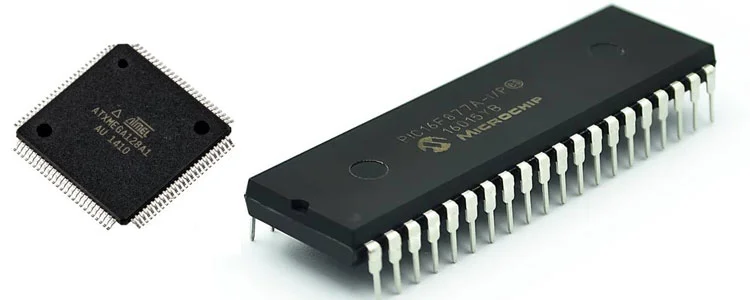
A microcontroller, often called an MCU, is a compact integrated circuit designed to control specific operations within electronic devices. Unlike a computer that can run many applications, a microcontroller focuses on performing one dedicated task—efficiently and reliably. It contains three main parts: a processor (CPU), memory, and input/output peripherals, all packed into a single tiny chip.
MCUs are found everywhere: from home appliances and automotive systems to industrial machinery, medical equipment, and IoT devices. If a device reacts to input, makes a decision, and produces an output, there’s a high chance a microcontroller is inside.
How Does a Microcontroller Work?
A microcontroller works by executing a program stored in its internal memory. This program tells the MCU how to read data from sensors, how to process it, and what action to perform.
1. Input Stage
The device collects data from the environment.
Examples:
-
A temperature sensor sends readings
-
A button press triggers a signal
-
A motion detector senses movement
2. Processing Stage
The CPU analyzes the data, performs operations, and makes decisions.
3. Output Stage
The MCU triggers an action.
Examples:
-
Turning on a fan when temperature rises
-
Lighting an LED
-
Transmitting data to a server
This closed loop of inputs → processing → outputs forms the core of every embedded system.
Key Components Inside an MCU
CPU (Central Processing Unit)
Handles all calculations and instructions.
Flash Memory
Stores the program permanently.
RAM
Stores temporary data during operation.
EEPROM
Stores non-volatile user data.
I/O Pins (GPIO)
Allow connection to external components such as sensors, motors, displays, and communication modules.
Timers & Counters
Manage time-sensitive operations like PWM signals.
Communication Interfaces
-
UART
-
I2C
-
SPI
-
CAN
-
USB
These let the MCU interact with other chips or computers.
Why Are Microcontrollers So Popular?
Low Cost
MCUs are extremely affordable. Many cost less than a dollar.
Low Power Consumption
They are ideal for battery-powered and portable devices.
Small Size
MCUs can fit into tiny spaces, even inside wearables.
High Reliability
They are designed to run continuously for years without failure.
Easy to Program
Platforms like Arduino, ESP32, and STM32 have made MCU development accessible to beginners.
Common Microcontroller Families
1. AVR (e.g., ATmega328P)
Used in Arduino Uno—beginner friendly.
2. PIC Microcontrollers
Popular in industrial and automotive applications.
3. ARM Cortex-M (STM32)
High performance, widely used in robotics, drones, and real-time systems.
4. ESP8266 / ESP32
Built-in Wi-Fi and Bluetooth, ideal for IoT.
5. TI MSP430
Ultra-low-power systems like smart meters.
Real-World Applications of Microcontrollers
Home and Consumer Electronics
-
Air conditioners
-
Televisions
-
Washing machines
-
Microwaves
-
Smart light bulbs
Automotive Industry
Modern cars contain more than 50 microcontrollers:
-
Airbag control
-
ABS braking systems
-
Engine management
-
Parking sensors
Robotics
MCUs read sensors, control motors, and manage the robot’s behavior.
Internet of Things (IoT)
MCUs enable smart home devices, wearables, and remote monitoring systems.
Healthcare
Used in glucose monitors, patient tracking devices, and medical pumps.
Industrial Automation
-
PLC systems
-
Motor controllers
-
Environmental monitors
How Do You Program a Microcontroller?
Microcontrollers are typically programmed using languages like:
-
C / C++ (most common)
-
MicroPython (ESP32, STM32, etc.)
-
Arduino language (C++ simplified)
Programming steps:
-
Write the code
-
Compile it
-
Upload it to the MCU via USB or programmer
-
Run and test
Tools like Arduino IDE, PlatformIO, or STM32CubeIDE simplify the process.
Microcontroller vs. Microprocessor: What’s the Difference?
| Feature | Microcontroller (MCU) | Microprocessor (CPU) |
|---|---|---|
| Integration | CPU + Memory + I/O | CPU only |
| Purpose | Dedicated tasks | General computing |
| Power Usage | Very low | Higher |
| Examples | ATmega, STM32 | Intel, AMD, ARM A-series |
| Devices | IoT, appliances | Computers, smartphones |
Why Learning Microcontrollers Matters
Understanding MCUs is essential for anyone interested in:
-
Electronics
-
Robotics
-
IoT development
-
Smart device design
-
Embedded engineering
They form the foundation of modern automation and smart technologies.
Conclusion
Microcontrollers are the silent engines driving today’s smart world. Their small size, efficiency, and versatility allow them to power countless devices—from simple household gadgets to advanced robotics and industrial systems. Whether you’re a beginner exploring electronics or a developer working on IoT innovation, learning microcontrollers opens the door to endless creativity and innovation.
